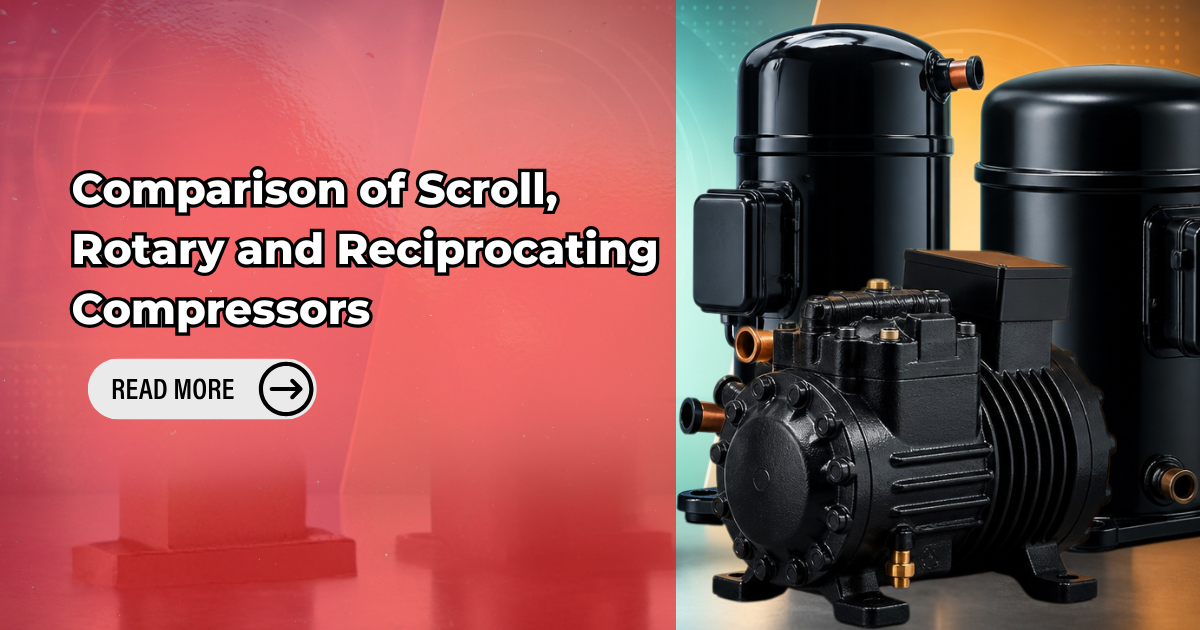
Scroll vs Rotary vs Reciprocating Compressors: Which is Best for Your Business?
Choosing between scroll vs rotary vs reciprocating compressors is one of the most critical purchasing decisions for any business operating in HVAC, cold storage, pharmaceutical manufacturing, or food processing. The wrong choice leads to higher energy bills, frequent breakdowns, and costly downtime — all of which directly impact your bottom line.
Whether you are setting up a large-scale cold storage facility in Mumbai, installing centralized air conditioning systems across commercial towers in Dubai, or running a GMP-compliant pharma plant in Hyderabad — the compressor you select determines your system efficiency, operational reliability, and total cost of ownership.
India and the Middle East are two of the fastest-growing markets for industrial refrigeration and HVAC systems. With ambient temperatures regularly crossing 45°C in the Gulf and extreme seasonal variation across Indian states, the demand for high-performance compressors from a trusted refrigeration compressor supplier India has never been higher.
This guide breaks down each compressor type in technical detail, compares them head-to-head, and gives you clear, actionable guidance to help you make the right decision for your specific application and geography.
What is a Scroll Compressor?
Working Principle
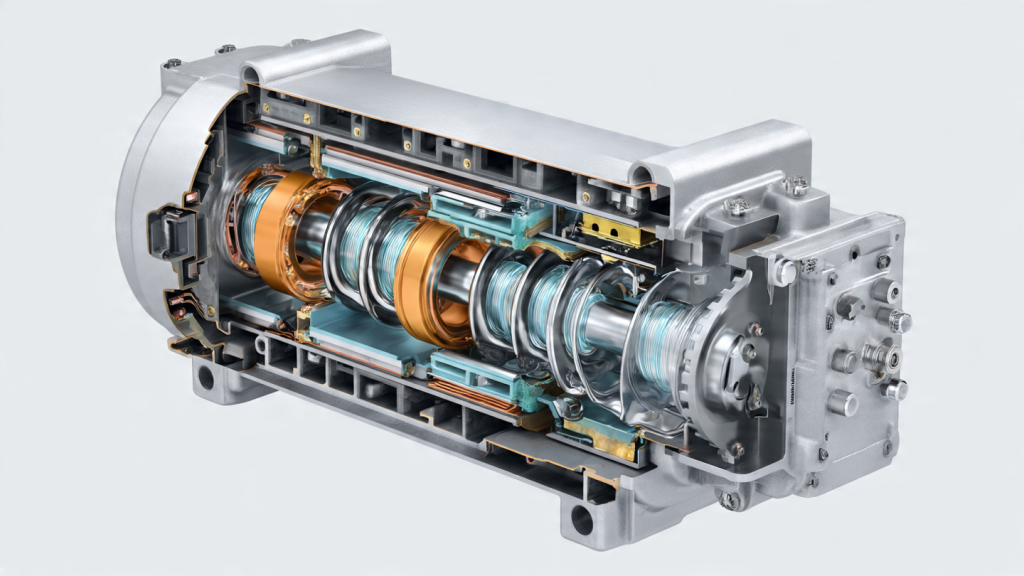
A scroll compressor uses two interleaved spiral-shaped scrolls — one fixed and one orbiting — to compress refrigerant gas. As the orbiting scroll moves in a circular pattern, it traps and progressively reduces pockets of gas, compressing them toward the center where they are discharged at high pressure. There are no reciprocating parts, no intake/discharge valves in the traditional sense, and no sudden pressure reversals.
Key Advantages
- Exceptionally high energy efficiency with EER ratings above 4.0
- Near-silent operation (55–65 dB) — ideal for hospitals, hotels, and office buildings
- Fewer moving parts means drastically lower maintenance requirements
- Smooth, continuous compression eliminates vibration and mechanical stress
- Excellent performance under partial loads — crucial for variable demand applications
- Best-in-class performance in high ambient temperature environments (up to 55°C)
Applications
Scroll compressors are the preferred choice for commercial HVAC systems, precision-controlled cold storage, pharmaceutical manufacturing (where GMP compliance is mandatory), supermarket refrigeration, data center cooling, and residential VRF/VRV systems.
Leading Brands: Emerson Copeland & Danfoss
When it comes to scroll compressors, two names consistently set the industry benchmark: Emerson Copeland and Danfoss. Copeland scroll compressors (part of Emerson’s Climate Technologies portfolio) are widely used across commercial refrigeration and HVAC across India and the GCC region. Danfoss scroll compressors, on the other hand, are known for their inverter-driven variable-speed technology, making them a strong choice for energy-sensitive applications.
As a leading scroll compressor exporter India, we stock and supply both Copeland and Danfoss scroll compressors for B2B buyers, contractors, and system integrators. Browse our range here:
Explore our scroll compressor supplier India range for full specifications and pricing.
What is a Rotary Compressor?
Working Principle
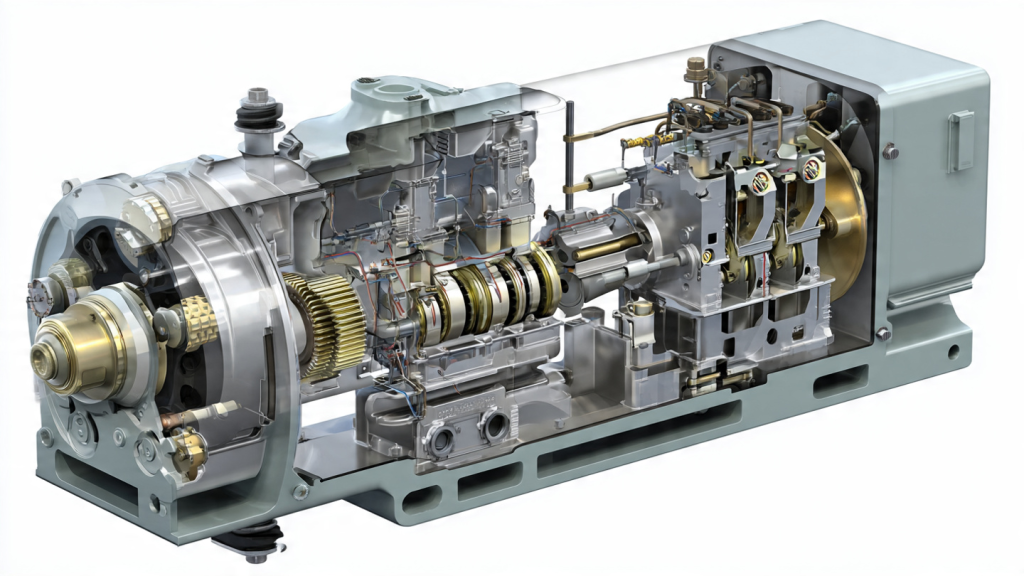
A rotary compressor uses a cylindrical rotor (or rolling piston) that rotates eccentrically within a cylinder. As the rotor spins, it creates a crescent-shaped compression chamber that reduces in volume, compressing the refrigerant gas before discharging it. The simplicity of the rotating mechanism gives this design its reliability and compact footprint.
Key Advantages
- Compact and lightweight design — easy to integrate into tight installation spaces
- Quieter than reciprocating compressors and suitable for light commercial use
- Lower manufacturing cost compared to scroll compressors
- Good efficiency at rated load conditions
- Reliable performance for standard air conditioning applications
Applications
Rotary compressors are the workhorse of the residential and light-commercial air conditioning market. You will find them in window ACs, split ACs, portable cooling units, and small-scale refrigeration systems. For HVAC projects requiring moderate tonnage with cost efficiency, rotary compressors remain a practical choice.
Looking for a reliable rotary compressor dealer India? We supply OEM-grade rotary compressors for contractors and bulk buyers across India and the Middle East.
What is a Reciprocating Compressor?
Working Principle
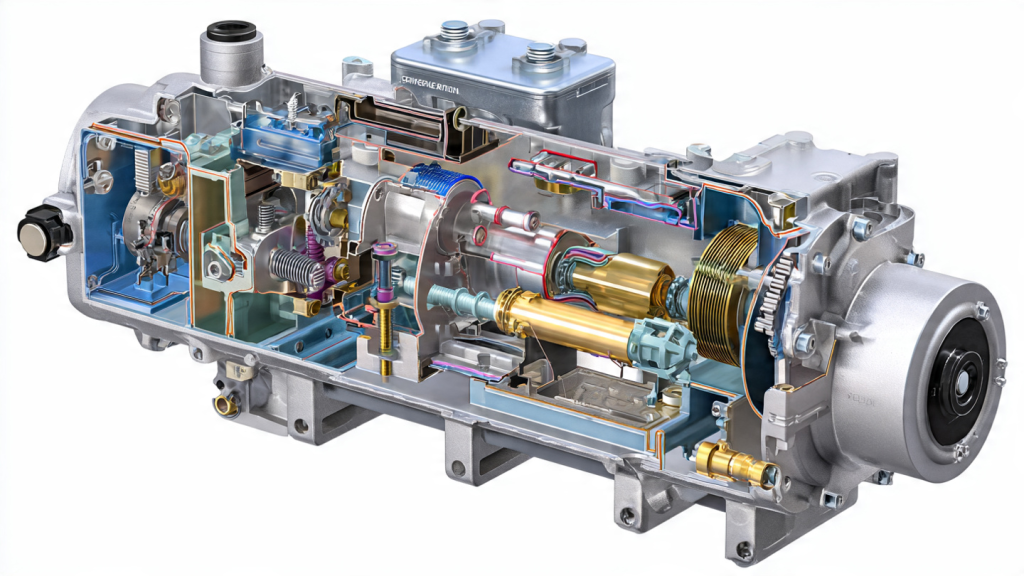
A reciprocating compressor — also known as a piston compressor — uses a crankshaft-driven piston that moves back and forth inside a cylinder to compress refrigerant gas. The intake valve opens to draw in gas, the piston compresses it, and the discharge valve opens to expel high-pressure gas. This mechanical design has been in use for over a century and remains highly capable for specific industrial applications.
Key Advantages
- Extremely versatile — handles a wide range of pressure ratios and refrigerants
- Lower upfront purchase cost compared to scroll or industrial rotary alternatives
- Widely serviceable — spare parts and technicians are readily available even in tier-3 cities
- Available in semi-hermetic configurations for field serviceability
- Capable of handling high-pressure applications in industrial refrigeration
Applications
Reciprocating compressors are commonly used in large cold storage facilities (fruit, vegetable, dairy, meat), industrial process cooling, blast freezers, ice plant manufacturing, and heavy-duty refrigeration applications. As a compressor for cold storage, the reciprocating design remains widely deployed despite higher noise and maintenance requirements.
Looking for a reliable Reciprocating compressor dealer India? We supply OEM-grade rotary compressors for contractors and bulk buyers across India and the Middle East.
Scroll vs Rotary vs Reciprocating: Detailed Comparison Table
Use this table to quickly compare the three compressor types across the parameters that matter most for B2B purchasing decisions:
| Feature | Scroll Compressor | Rotary Compressor | Reciprocating Compressor |
| Efficiency | Very High (EER 4.0+) | High (medium loads) | Medium (variable load) |
| Noise Level | Very Low (55–65 dB) | Low–Medium (60–72 dB) | High (75–90 dB) |
| Initial Cost | High | Medium | Low–Medium |
| Maintenance Cost | Very Low | Low | Medium–High |
| Durability | Excellent (10–20 yrs) | Good (8–15 yrs) | Good (8–15 yrs) |
| Moving Parts | 2 (orbital + fixed scroll) | Few (1 rotor) | Many (piston, valves) |
| Application Range | HVAC, Pharma, Retail | AC, Light Industrial | Cold Storage, Industrial |
| Ambient Temp Suitability | Excellent (up to 55°C) | Good (up to 48°C) | Good (with cooling) |
| Vibration | Minimal | Low | High |
| Brand Examples | Emerson Copeland, Danfoss | Various OEMs | Bitzer, Tecumseh, Carlyle |
Note: Performance values are indicative and vary by model, refrigerant, and operating conditions. Contact us for application-specific compressor selection.
Which Compressor is Best for Your Business?
There is no single “best” compressor — the right choice depends entirely on your application, load profile, budget, and operating environment. Here is how to decide:
For HVAC Companies and Contractors
If you are working on commercial buildings, malls, hotels, hospitals, or data centers, the scroll compressor is your strongest technical choice. Its low noise, high efficiency, and minimal maintenance align perfectly with the expectations of facility managers and building owners. Emerson Copeland and Danfoss scroll compressors are the standard specification in most high-value HVAC contracts across India and the UAE.
For smaller residential projects and light-commercial split-AC installations, rotary compressors offer a cost-effective and reliable solution that your customers expect.
For Cold Storage Operators
Large cold storage facilities handling fruits, vegetables, dairy, or meat typically require compressors that can handle high-pressure differentials and extended operating hours. Reciprocating compressors (particularly semi-hermetic Bitzer or Carlyle models) have historically dominated this space. However, for medium-capacity cold rooms and pharmaceutical cold chains, scroll compressors are increasingly being adopted as the compressor for cold storage of choice due to their superior efficiency and reliability.
For Pharmaceutical and Life Sciences Industry
The compressor for pharma industry must meet stringent reliability and cleanliness standards. Temperature excursions in pharma cold chains can result in regulatory non-compliance and product loss worth crores. Scroll compressors — particularly Danfoss Inverter scrolls — are strongly preferred in pharmaceutical cold storage and cleanroom HVAC due to their precise temperature control, near-zero vibration, and low maintenance footprint.
For Heavy Industrial Use
Process cooling, blast freezing, ice manufacturing, and heavy industrial refrigeration typically require reciprocating compressors for their flexibility in handling varying pressure conditions and wide refrigerant compatibility. For industrial buyers who are already purchasing through a reciprocating compressor dealer, semi-hermetic designs offer the additional advantage of field repair — reducing operational downtime in remote plant locations.
India vs Middle East Market: Which Compressor Works Best?
Climate as a Key Factor
The single biggest variable that separates the Indian and Middle East compressor markets is ambient temperature. In GCC countries — UAE, Saudi Arabia, Qatar, Kuwait, Oman, and Bahrain — outdoor temperatures regularly exceed 45°C and can touch 52°C in peak summer. This places immense stress on compressors, particularly on high-pressure side components and lubrication systems.
Standard compressors designed for 35°C ambient (the common Indian specification) will over-amp, trip, or fail prematurely when installed in Gulf conditions. This is why the Middle East market demands compressors specifically rated for high-ambient operation.
Market Preferences by Region
India: The Indian market shows strong demand across all three compressor types. Rotary compressors dominate the residential AC segment. Reciprocating compressors lead in cold storage, food processing, and ice plants. Scroll compressors are seeing rapid adoption in pharma, data centers, commercial HVAC, and organized retail. As a leading industrial compressor exporter India, we serve buyers across Mumbai, Delhi, Ahmedabad, Bangalore, Hyderabad, Pune, and Kolkata.
Middle East (UAE, Saudi Arabia, Qatar, Kuwait, Oman, Bahrain): The Gulf market overwhelmingly favors high-ambient scroll compressors for commercial HVAC. Emerson Copeland ZR/ZF series and Danfoss Performer series — both rated for high ambient conditions — are standard specifications in GCC district cooling projects, hotel HVAC systems, and large-scale commercial buildings. As a trusted HVAC compressor supplier and scroll compressor exporter India serving the Middle East, we handle the full export documentation, CE/TUV certification, and Gulf-standard packaging required for hassle-free import.
How to Choose the Right Compressor Supplier in India
Why Your Supplier Matters as Much as the Brand
Buying a compressor from the wrong source — even the right brand — can result in counterfeit products, missing documentation, unsupported warranty claims, and customs clearance problems. For businesses importing into the Middle East or operating in pharma and food-grade sectors, these risks are especially costly.
Here is what to look for in a refrigeration compressor supplier India for B2B and bulk procurement:
- Authorized dealership or distributor status for the brands you need (Copeland, Danfoss, Bitzer, etc.)
- Experience in export documentation — GST invoices, country of origin certificates, CE/ISO compliance
- Ability to handle bulk compressor orders with consistent supply chain and lead times
- Technical pre-sales support for application selection and system sizing
- After-sales warranty support and access to genuine spare parts
- Track record of supplying to your industry — HVAC, pharma, cold storage, food processing
Our Commitment as a Bulk Compressor Supplier
We are one of India’s leading compressor exporters, supplying to HVAC contractors, cold storage operators, pharma companies, and system integrators across India and the Middle East. Our stock includes scroll, rotary, and reciprocating compressors from globally recognized brands — available for immediate dispatch, bulk procurement, and scheduled supply agreements.
Whether you need 5 units or 500 units, we provide competitive pricing, full technical documentation, and export-ready packaging. Contact our team to discuss your requirement.
Frequently Asked Questions (FAQs)
Q: Which compressor type is the most energy-efficient?
A: Scroll compressors are the most energy-efficient of the three types, particularly under partial load conditions. Models from Emerson Copeland and Danfoss regularly achieve EER values above 4.0, making them the preferred choice for energy-sensitive applications like pharma cold storage and high-end commercial HVAC.
Q: Which compressor is best for cold storage?
A: For large-scale cold storage (above 10 TR), semi-hermetic reciprocating compressors from brands like Bitzer or Carlyle are still widely used due to their robustness and field serviceability. For medium-capacity cold rooms and pharmaceutical cold chains, scroll compressors offer superior efficiency, lower maintenance, and better temperature precision. Speak with our team to get an application-specific recommendation.
Q: Which compressor type works best in Gulf countries (UAE, Saudi Arabia, Qatar)?
A: In the Middle East, high-ambient rated scroll compressors are the standard choice for commercial HVAC. The Emerson Copeland ZR/ZF series and Danfoss Performer series are specifically engineered for operation at ambient temperatures up to 55°C — making them the go-to solution for GCC markets. Rotary and standard reciprocating compressors risk premature failure in extreme Gulf ambient conditions unless properly derated and protected.
Q: What is the difference between scroll and reciprocating compressors?
A: A scroll compressor uses two spiral-shaped scrolls with continuous circular motion to compress gas — resulting in low noise, fewer parts, and high efficiency. A reciprocating compressor uses a piston moving back and forth in a cylinder — a design that is more mechanically complex, louder, and requires more maintenance, but offers flexibility in handling high-pressure applications and a wider range of refrigerants. Scroll compressors are better for HVAC and pharma; reciprocating compressors are better for heavy industrial refrigeration.
Q: Which compressor type has the lowest maintenance requirements?
A: Scroll compressors have the lowest maintenance requirements by a significant margin. With only two moving parts (the fixed and orbiting scroll), there are no valve assemblies, no pistons, no connecting rods, and no crankshaft wear issues. This results in dramatically lower maintenance costs and higher uptime — especially important for pharma, food, and mission-critical HVAC applications. Rotary compressors come second, while reciprocating compressors have the highest maintenance burden due to their multiple moving components and valve systems.
Ready to Source the Right Compressor for Your Business?
Whether you are an HVAC contractor in Dubai, a cold storage operator in Delhi NCR, or a pharma company in Ahmedabad sourcing compressors in bulk — we are your trusted industrial compressor exporter India partner.
- Scroll, rotary, and reciprocating compressors — all in stock
- Brands: Emerson Copeland, Danfoss, Bitzer, Tecumseh, and more
- Serving India and Middle East markets: UAE, Saudi Arabia, Qatar, Oman, Kuwait, Bahrain
- Bulk orders welcomed — competitive pricing, reliable lead times, full documentation
Contact us today to discuss your compressor requirement, get a bulk quote, or request technical application support. Our team is ready to help you make the right choice.
A structured, technically capable export partner is not merely a supplier—but a long-term trade ally in sustaining industrial growth and operational reliability.