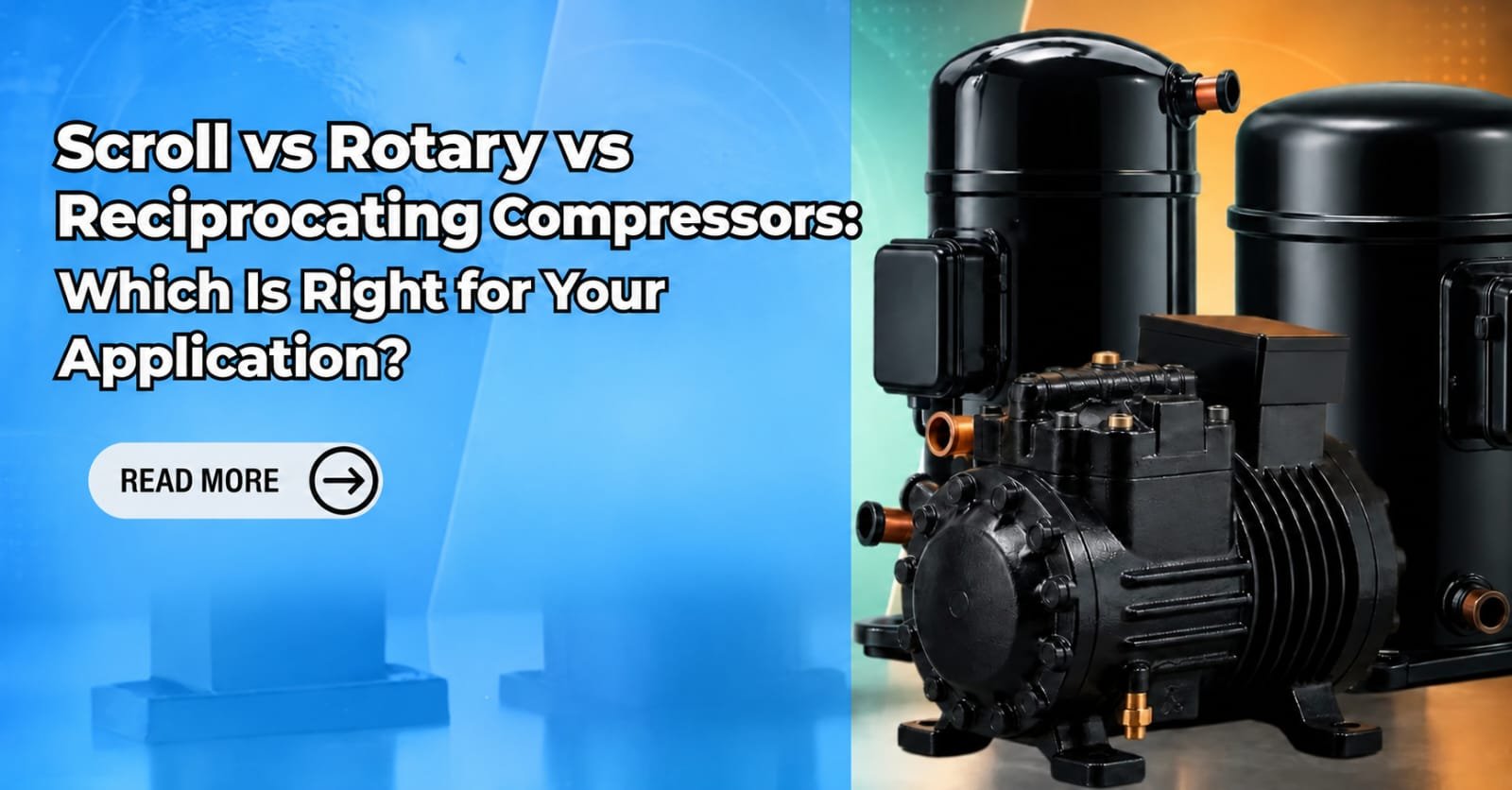
Scroll vs Rotary vs Reciprocating Compressors: Which Is Right for Your Application?
Choosing between scroll, rotary and reciprocating compressors depends on your cooling requirements, operating conditions, energy-efficiency goals, maintenance needs and budget. Each compressor type uses a different mechanism to compress refrigerant and is designed for specific refrigeration and air-conditioning applications.
What is the difference between scroll, rotary and reciprocating compressors? A scroll compressor uses spiral-shaped elements, a rotary compressor uses a rotating mechanism, and a reciprocating compressor uses a piston moving inside a cylinder to compress refrigerant. The right choice depends on the equipment design, required cooling capacity and operating conditions.
For HVAC contractors, refrigeration businesses, cold-storage operators and equipment buyers, understanding these differences can help narrow down suitable options. This guide compares the working principles, advantages, limitations, applications and key selection factors of all three compressor types, including considerations for installations in India and the Middle East.
What is a Scroll Compressor?
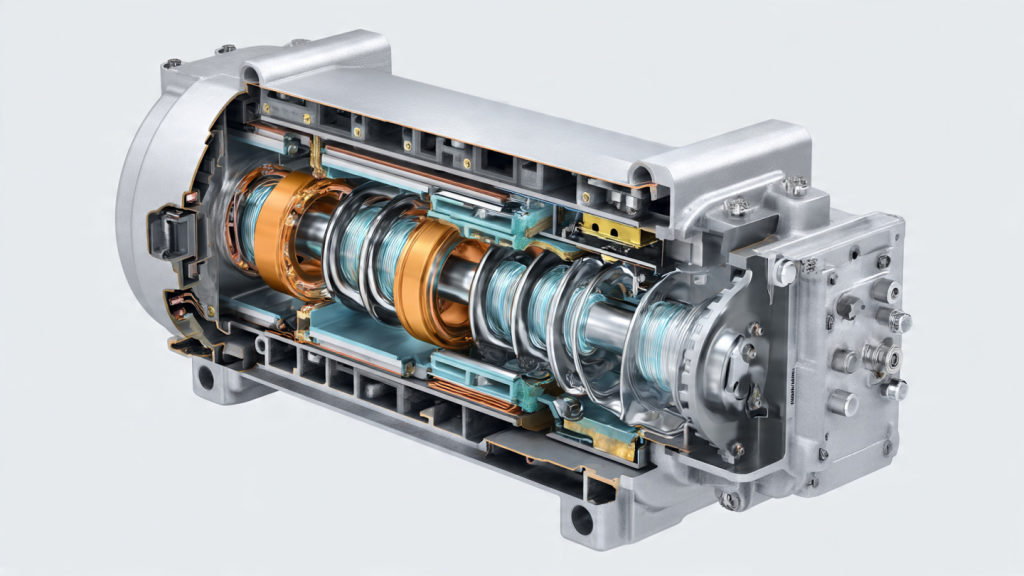
A scroll compressor is a type of compressor that uses two spiral-shaped scrolls to compress refrigerant. One scroll remains stationary while the other moves in an orbiting motion, trapping refrigerant and gradually reducing its volume before discharge. Scroll compressors are commonly used in air-conditioning and selected commercial refrigeration applications.
How Does a Scroll Compressor Work?
A scroll compressor draws low-pressure refrigerant vapour into the spaces between two spiral-shaped scrolls. As the moving scroll orbits around the stationary scroll, the trapped refrigerant moves toward the centre. The pockets of refrigerant become smaller, increasing pressure before the compressed vapour exits through the discharge port.
Key Advantages of Scroll Compressors
- Compact design: Scroll compressors offer a compact compression mechanism for compatible HVAC and refrigeration systems.
- Smooth operation: Their continuous compression process can provide smooth operation in suitable applications.
- Fewer moving components: Many scroll designs have fewer moving parts than conventional reciprocating designs, although construction varies by model.
- Application flexibility: Different scroll compressor models are designed for specific cooling capacities, refrigerants and operating conditions.
Scroll compressors are used in various HVAC and refrigeration applications, including:
Other cooling applications that fall within the manufacturer’s operating specifications
Commercial air-conditioning systems
Selected commercial refrigeration systems
Supermarket refrigeration equipment designed for compatible scroll compressors
Variable refrigerant flow (VRF) systems, where supported by the equipment design
What Should You Check Before Choosing a Scroll Compressor?
Before selecting a scroll compressor, check the required cooling capacity, refrigerant compatibility, evaporating and condensing temperatures, electrical supply and manufacturer’s operating envelope. For installations in India and the Middle East, verify performance under the expected ambient and operating conditions rather than assuming every model is suitable for high-temperature environments.
Explore our scroll compressors to review available options for your application.
What is a Rotary Compressor?
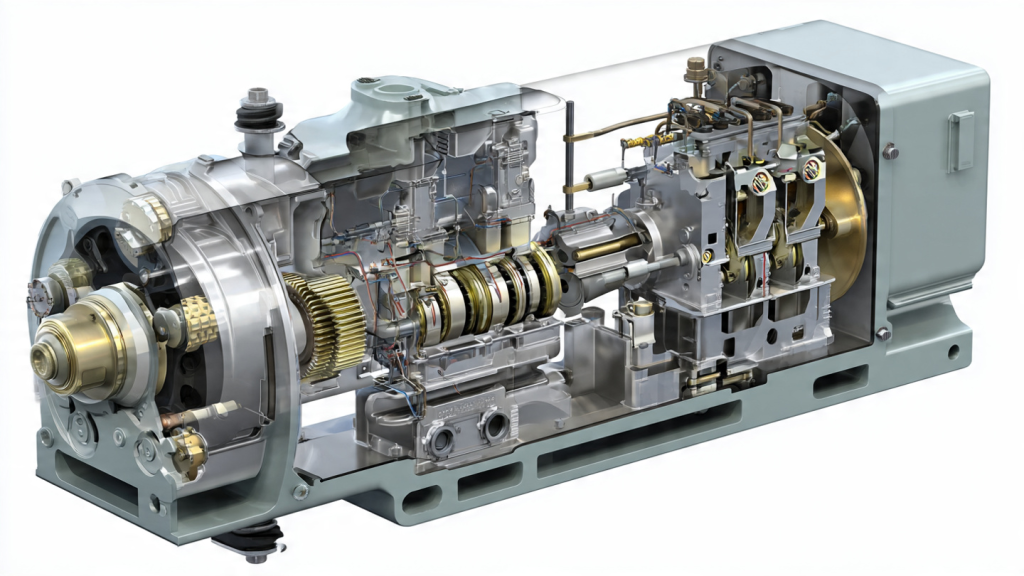
A rotary compressor is a type of compressor that uses a rotating mechanism to compress refrigerant. Depending on its design, it may use a rolling piston or rotating vanes to trap refrigerant and reduce its volume. Rotary compressors are commonly used in residential air conditioners and other compact cooling systems, depending on their capacity and operating requirements.
How Does a Rotary Compressor Work?
In a rotary compressor, refrigerant vapour enters the compression chamber at low pressure. A rotating mechanism traps the refrigerant and reduces the available chamber volume, increasing its pressure. The compressed refrigerant then leaves through the discharge port and continues through the refrigeration cycle.
The exact compression process depends on whether the compressor uses a rolling-piston, rotary-vane or another rotary design.
Key Advantages of Rotary Compressors
- Compact construction: Many rotary compressors are designed for space-constrained cooling equipment.
- Smooth operation: Their rotating mechanism can provide relatively smooth operation in suitable applications.
- Residential cooling applications: Rotary compressors are widely used in many residential air-conditioning systems.
- Application-specific options: Different models are available for different capacities, refrigerants and operating conditions.
Rotary compressors are commonly used in residential and light-commercial air-conditioning systems. When selecting a rotary compressor, buyers should check refrigerant compatibility, cooling capacity, operating conditions and manufacturer specifications. Compressor CR offers different compressor options for cooling applications across India and the Middle East. Explore our rotary compressors or contact our team to discuss your application and identify a suitable model.
What is a Reciprocating Compressor?
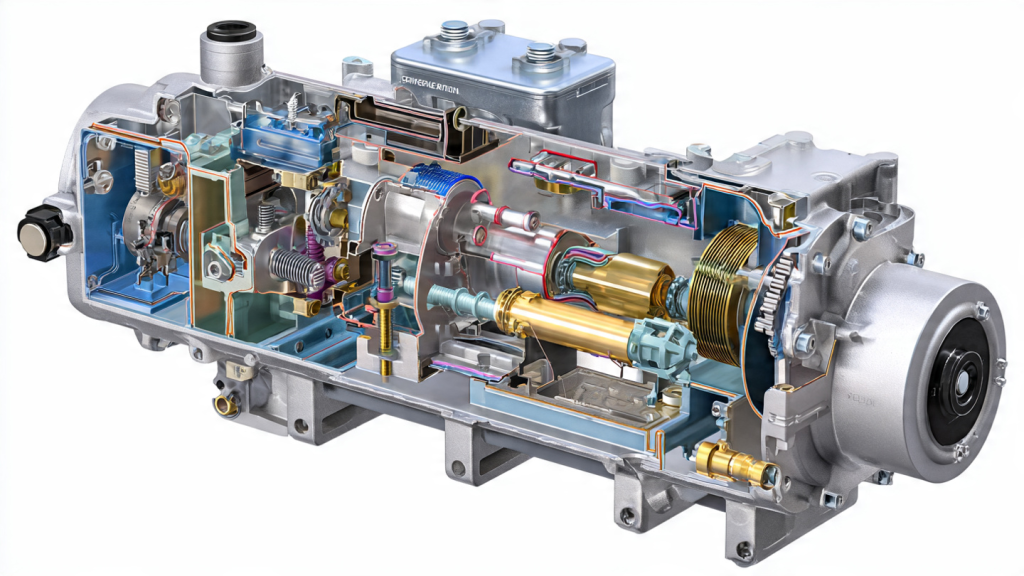
A reciprocating compressor is a type of compressor that uses a piston moving inside a cylinder to compress refrigerant vapour. As the piston moves back and forth, it draws in low-pressure vapour, compresses it and discharges it at a higher pressure. Reciprocating compressors are used in refrigeration, cold-storage and selected industrial cooling applications, depending on the model and operating requirements.
Working Principle of a Reciprocating Compressor
A reciprocating compressor works through the movement of a piston inside a cylinder. During the suction stroke, low-pressure refrigerant vapour enters the cylinder. During the compression stroke, the piston reduces the available volume, increasing the refrigerant pressure. The compressed vapour then exits through the discharge valve and continues through the refrigeration cycle.
Key Advantages of Reciprocating Compressors
- Versatile applications: Available for different refrigeration and cooling requirements.
- Multiple configurations: Models vary in capacity, construction and operating range.
- Serviceability: Some designs allow individual components to be inspected and serviced, subject to manufacturer guidance.
- Application flexibility: Suitable models can serve refrigeration and industrial cooling systems with specific operating requirements.
Applications of Reciprocating Compressors
Reciprocating compressors are used in:
- Cold-storage and refrigeration systems
- Commercial and industrial refrigeration
- Ice plants and selected freezing applications
- Process cooling systems
- Other applications supported by the compressor’s operating specifications
What Should You Check Before Choosing a Reciprocating Compressor?
Check the required cooling capacity, refrigerant compatibility, suction and discharge conditions, electrical supply, duty cycle and maintenance requirements. Compare the manufacturer’s performance data against your actual operating conditions before selecting a model.
Explore our reciprocating compressors to review available options.
Scroll vs Rotary vs Reciprocating Compressors: Detailed Comparison
Scroll, rotary and reciprocating compressors differ in their compression mechanisms, typical applications, construction and maintenance requirements. The most suitable option depends on the required cooling capacity, refrigerant, operating conditions and equipment design.
| Comparison Factor | Scroll Compressor | Rotary Compressor | Reciprocating Compressor |
|---|---|---|---|
| Working Principle | Uses two spiral-shaped scrolls | Uses a rotating compression mechanism | Uses a piston moving inside a cylinder |
| Moving Mechanism | Orbiting scroll | Rotating element, such as a rolling piston or vane | Reciprocating piston |
| Typical Applications | HVAC and selected commercial refrigeration systems | Residential AC and selected compact cooling systems | Cold storage, refrigeration and selected industrial applications |
| Design | Compact scroll assembly | Compact rotating mechanism | Cylinder-and-piston assembly |
| Noise and Vibration | Depends on model and installation | Depends on model and installation | Depends on model, speed and installation |
| Energy Efficiency | Depends on model and operating conditions | Depends on model and operating conditions | Depends on model and operating conditions |
| Maintenance Requirements | Follow manufacturer recommendations | Follow manufacturer recommendations | Depend on compressor design and service requirements |
| Selection Factors | Capacity, refrigerant and operating envelope | Capacity, refrigerant and operating envelope | Capacity, pressure requirements and duty cycle |
Which compressor should you choose?
- Scroll compressor: Consider it for compatible HVAC and commercial refrigeration applications where its operating range meets system requirements.
- Rotary compressor: Consider it for suitable residential air-conditioning and compact cooling applications.
- Reciprocating compressor: Consider it for refrigeration and other applications where the selected model meets the required capacity and operating conditions.
These are general comparisons, not universal performance rankings. Always verify the specific compressor’s technical datasheet before making a purchasing decision.
Which Compressor Is Best for Your Business?
The right compressor depends on the application, required cooling capacity, operating conditions, refrigerant compatibility and equipment specifications. Scroll, rotary and reciprocating compressors each serve different requirements, so compare the manufacturer’s performance data before making a selection.
Best Compressor for HVAC Systems
Scroll compressors are commonly used in compatible residential and commercial HVAC systems. Rotary compressors are also used in many residential air-conditioning units. The appropriate option depends on the system design, cooling capacity, energy-efficiency requirements and operating conditions.
For smaller residential projects and light-commercial split-AC installations, rotary compressors offer a cost-effective and reliable solution that your customers expect.
Best Compressor for Cold Storage and Refrigeration
Reciprocating compressors are used in various commercial and industrial refrigeration applications, including some cold-storage systems. However, the correct compressor depends on the required refrigeration capacity, evaporating and condensing temperatures, refrigerant and duty cycle.
Best Compressor for Pharmaceutical Cooling
Pharmaceutical storage and processing require reliable temperature control. Compressor selection should be based on the cooling system design, required temperature range, operating conditions and applicable equipment specifications. Scroll or reciprocating compressors may be suitable depending on the application and model.
Best Compressor for Industrial Cooling
Industrial cooling requirements vary by process, capacity and operating conditions. Reciprocating compressors may be suitable for certain refrigeration and process-cooling systems, while scroll compressors can serve compatible applications. Review manufacturer data and system requirements before choosing.
Important: No single compressor type is best for every business. Confirm the required capacity, refrigerant compatibility, operating range, electrical supply and service requirements before purchasing.
Compressor Selection in India and the Middle East
Compressor selection for India and Middle Eastern markets depends on the application, ambient conditions, cooling load, refrigerant and equipment specifications. Buyers should verify that the selected compressor is suitable for the actual installation environment rather than choosing based on location alone.
Compressor Requirements in India
For refrigeration and air-conditioning systems in India, consider the required cooling capacity, local operating conditions, electrical supply, refrigerant compatibility and availability of technical support. Always compare the compressor manufacturer’s performance data with the system’s design requirements.
Compressor Requirements in the Middle East
In Middle Eastern markets, some installations operate under high ambient temperatures. Buyers should check the compressor’s approved operating envelope, cooling capacity at the expected conditions, refrigerant compatibility and any additional cooling or installation requirements specified by the manufacturer.
How to Choose the Right Compressor
Whether your project is in India or the Middle East, check these factors before purchasing:
- Required cooling capacity and operating conditions
- Refrigerant and system compatibility
- Expected ambient and operating temperatures
- Electrical supply and installation requirements
- Manufacturer’s technical datasheet and service recommendations
Compressor CR supplies compressor options for cooling applications. Contact the team with your application details to discuss suitable models and confirm specifications before ordering.
Here is what to look for in a refrigeration compressor supplier India for B2B and bulk procurement:
- Authorized dealership or distributor status for the brands you need (Copeland, Danfoss, Bitzer, etc.)
- Experience in export documentation — GST invoices, country of origin certificates, CE/ISO compliance
- Ability to handle bulk compressor orders with consistent supply chain and lead times
- Technical pre-sales support for application selection and system sizing
- After-sales warranty support and access to genuine spare parts
- Track record of supplying to your industry — HVAC, pharma, cold storage, food processing
Compressor CR supplies compressor options for cooling applications. Contact the team with your application details to discuss suitable models and confirm specifications before ordering.
Frequently Asked Questions (FAQs)
Q: What is the difference between scroll, rotary and reciprocating compressors?
A: A scroll compressor uses two spiral-shaped elements, a rotary compressor uses a rotating compression mechanism, and a reciprocating compressor uses a piston moving inside a cylinder. Their suitability depends on the application, operating conditions and compressor specifications.
Q: Which compressor is best for air conditioning?
A: Scroll and rotary compressors are both used in air-conditioning systems. The suitable type depends on the equipment design, cooling capacity, refrigerant and operating conditions.
Q: Which compressor is suitable for cold storage?
A: Reciprocating compressors are used in various refrigeration and cold-storage applications. The correct model must match the required cooling capacity, refrigerant and operating temperatures.
Q: Which compressor is more energy-efficient?
A: There is no universal answer. Energy efficiency depends on the specific compressor model, load, operating conditions, system design and control method. Compare manufacturer performance data under equivalent conditions.
Q: How do scroll, rotary and reciprocating compressors differ in maintenance?
A: Maintenance requirements vary by compressor design and model. Follow the manufacturer’s service schedule and instructions, and consider component availability and local technical support when selecting a compressor.
Q:How do you choose the right compressor for a business?
A:Check the required cooling capacity, refrigerant compatibility, suction and discharge conditions, electrical supply, duty cycle and installation environment. Verify the selected model’s technical datasheet before purchasing.
Q:Where can I find compressors for refrigeration and air conditioning?
A: Compressor CR offers compressor options for different cooling applications. Review the relevant scroll compressor range, rotary compressor range or reciprocating compressor range to explore available options.
Find the Right Compressor for Your Application
Choosing between scroll, rotary and reciprocating compressors requires checking your cooling requirements, refrigerant compatibility, operating conditions and equipment specifications.
Compressor CR offers compressor options for refrigeration and air-conditioning applications in India and the Middle East. Share your application details and required specifications with our team to discuss suitable models.
Need help selecting a compressor? Contact Compressor CR to discuss your requirements.
Contact us today to discuss your compressor requirement, get a bulk quote, or request technical application support. Our team is ready to help you make the right choice.
A structured, technically capable export partner is not merely a supplier—but a long-term trade ally in sustaining industrial growth and operational reliability.