Selecting the right Compressor Exporter from India is a strategic decision for distributors, project contractors, MEP companies, cold storage developers, and industrial buyers across the Gulf region. Compressors are critical components in HVAC systems, refrigeration plants, manufacturing units, and energy-related industries. Performance reliability, energy efficiency, correct sizing, and supply chain consistency directly affect operational continuity and project profitability.
Indian compressor exporters have evolved from being price-competitive suppliers to becoming technically capable global partners. With advanced manufacturing capabilities, international quality standards, and structured export documentation processes, India today serves as a dependable sourcing hub for industrial air compressors, HVAC compressors, and refrigeration compressor export requirements.
This pillar guide explains why India is a strong sourcing destination, the types of compressors exported, pricing structures including FOB models, documentation standards, logistics considerations, and what international buyers should evaluate before selecting an export partner.
Why India is a Strategic Export Hub for Compressors
India has become one of the most efficient global sourcing destinations for mechanical and refrigeration equipment. For Gulf-based importers and contractors, sourcing from India offers multiple advantages:
1. Strong Manufacturing Ecosystem
India hosts globally recognized compressor brands and OEM manufacturing facilities. From hermetic scroll compressors to heavy-duty industrial air compressors, production lines are built to meet international quality benchmarks including ISO and CE standards.
2. Engineering & Technical Expertise
Indian exporters have extensive experience in supplying compressors for high ambient temperature regions. Gulf climates demand equipment that can operate reliably at elevated temperatures, often exceeding 45°C. Export-grade compressors are selected and configured to handle:
- High discharge pressures
- Continuous operation cycles
- Heavy dust exposure
- Variable voltage conditions
This technical understanding strengthens India’s position as a reliable HVAC compressor supplier and industrial compressor export source.
3. Competitive Cost Structure
India benefits from:
- Skilled engineering workforce
- Strong component supply chains
- Competitive labor and logistics costs
This translates into cost-effective bulk compressor supplier pricing without compromising quality.
4. Efficient Port Infrastructure
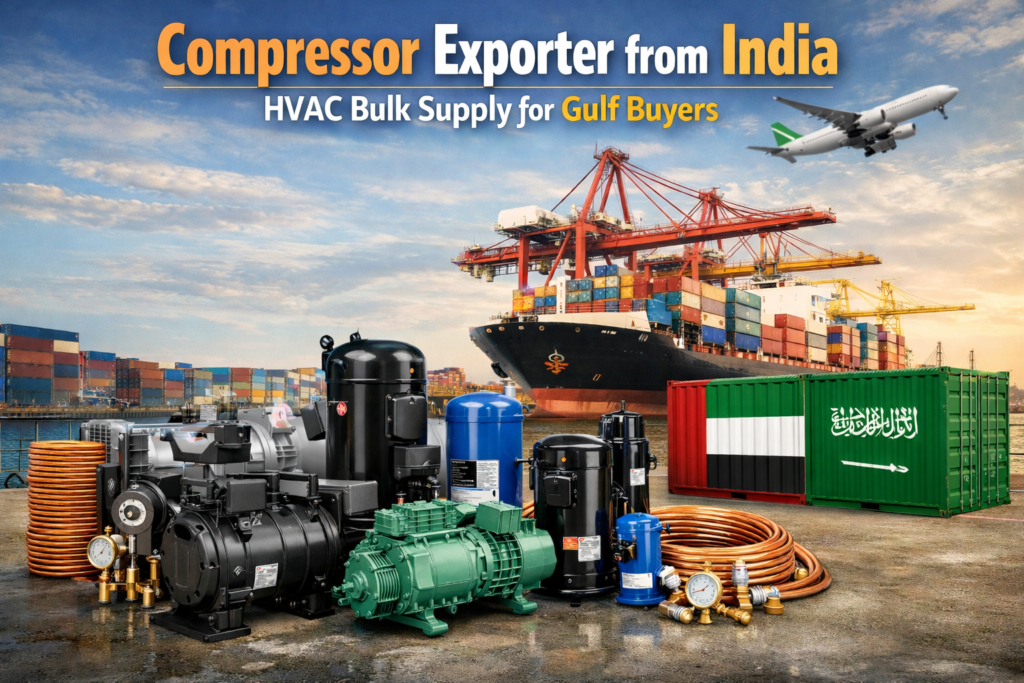
Major ports such as Mumbai, Mundra, and Chennai enable efficient containerized export. Shorter sea routes to the Gulf region reduce transit time and freight costs, supporting timely project execution.
Types of Compressors Exported from India
A professional Compressor Exporter from India typically supplies multiple compressor categories depending on industrial requirements.
1. Industrial Air Compressors
Industrial air compressors are widely used in manufacturing plants, oil & gas support services, fabrication workshops, and large industrial facilities.
Common Types:
- Reciprocating air compressors
- Screw air compressors
- Oil-injected rotary compressors
- Oil-free compressors
Applications:
- Pneumatic tools
- Industrial automation
- Packaging lines
- Power generation backup
- Drilling support
For Gulf industrial environments, screw compressors are often preferred due to durability, continuous duty cycles, and better efficiency under high load conditions. Industrial air compressor export orders typically involve container-level quantities for factories and infrastructure projects.
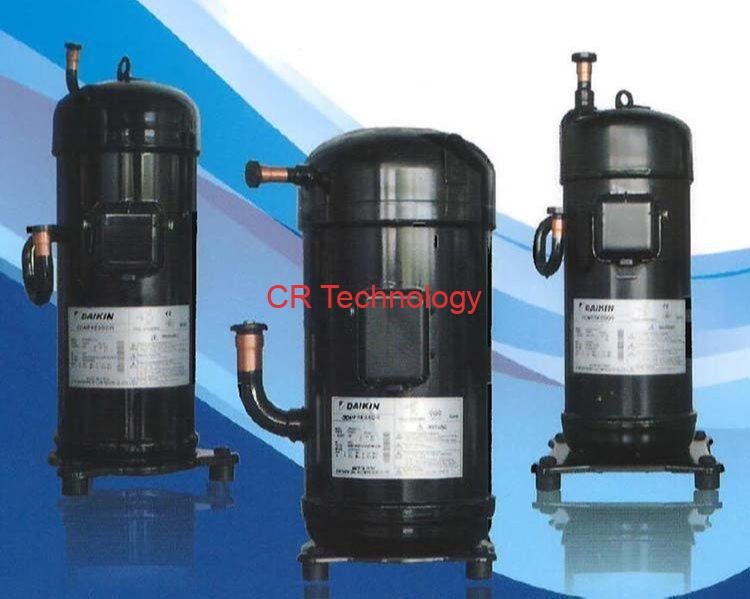
2. Refrigeration Compressors
Refrigeration compressor export forms a significant portion of trade to the Gulf region due to strong demand from cold storage, food processing, hospitality, and supermarket sectors.
Types Exported:
- Hermetic compressors
- Semi-hermetic compressors
- Scroll compressors
- Reciprocating compressors
Applications:
- Cold rooms
- Blast freezers
- Supermarket refrigeration
- Ice plants
- Industrial refrigeration systems
Export-grade refrigeration compressors are selected for high ambient performance, ensuring stable cooling even in extreme climates. Proper refrigerant compatibility (R134a, R404A, R407C, R410A, etc.) is also verified before shipment.
3. HVAC Compressors
As a leading HVAC compressor supplier, Indian exporters supply compressors for:
- Central air conditioning systems
- Rooftop units
- Chillers
- VRF systems
- Commercial buildings
Common Categories:
- Scroll compressors
- Rotary compressors
- Screw compressors
- Inverter compressors
Gulf projects require HVAC systems capable of sustained cooling during prolonged peak temperatures. Compressors supplied for these markets are selected with enhanced cooling capacity and durability.
4. Commercial Compressors
Commercial compressors are widely used in:
- Supermarkets
- Restaurants
- Hospitality chains
- Medical refrigeration
- Beverage storage systems
Commercial compressor supply typically includes mixed container loads customized for distributors serving multiple retail and commercial clients.
Export Pricing & Understanding FOB Terms
What is FOB Price in Compressor Export?
FOB (Free on Board) is a widely used international trade term. When buyers request a Compressor FOB price India, it means:
The seller covers:
- Product manufacturing cost
- Export packing
- Inland transportation to port
- Port handling charges
- Loading onto vessel
The buyer covers:
- Ocean freight
- Marine insurance
- Destination port charges
- Customs clearance at destination
Understanding FOB structure allows importers to compare international compressor supplier quotations accurately.
How Bulk Pricing Work
Bulk compressor supplier pricing depends on:
- Quantity ordered
- Model mix
- Container load optimization
- Brand selection
- Payment terms
Full container load (FCL) shipments typically reduce per-unit cost compared to smaller LCL shipments. Exporters often provide structured price tiers for distributors placing repeat industrial compressor export orders.
How to Request a Compressor Export Quotation
To receive an accurate compressor export quotation, buyers should provide:
- Compressor type
- Capacity (HP/TR)
- Refrigerant type (if applicable)
- Voltage & frequency requirements
- Quantity required
- Port of destination
- Preferred Incoterm (FOB/CIF)
Providing technical specifications ensures precise pricing and avoids delays.
Export Documentation & Compliance
Professional exporters follow structured documentation procedures to ensure smooth customs clearance.
Essential Export Documents
- Commercial Invoice
Details product description, quantity, value, HS code, and payment terms. - Packing List
Specifies packaging details, dimensions, gross weight, and net weight. - Certificate of Origin
Confirms the product is manufactured in India. Required for customs and tariff benefits. - Bill of Lading
Issued by shipping line confirming goods are loaded onboard. - HS Code Classification
Compressors are classified under specific Harmonized System codes for customs processing.
Accurate documentation reduces clearance delays and strengthens trust between exporter and importer.
Packaging & Logistics for Gulf Region
Export packaging is critical for heavy mechanical equipment.
Packaging Standards
- Industrial wooden crates
- Fumigated pallets
- Shock-resistant internal support
- Moisture-resistant wrapping
- Rust-preventive oil coating (for air compressors)
Container Loading
Compressors are loaded carefully to avoid:
- Transit vibration damage
- Oil leakage
- Structural impact
Proper lashing and weight distribution are maintained for 20ft and 40ft containers.
Transit Time
Sea transit from India to major Gulf ports typically ranges between 5–12 days depending on shipping route and port congestion.
Shorter transit duration reduces risk exposure and supports faster project deployment.
Industries Served
A structured Compressor Exporter from India supplies to a wide range of industries:
1. Cold Storage & Food Processing
- Meat processing plants
- Dairy facilities
- Frozen food storage
- Agricultural cold chains
Reliable refrigeration compressor export supply ensures temperature stability and food safety compliance.
2. Supermarkets & Retail Chains
Commercial refrigeration systems require dependable compressors to maintain 24/7 operation.
3. HVAC Infrastructure Projects
- Commercial buildings
- Shopping malls
- Hotels
- Hospitals
- Airports
HVAC compressor supplier capability is critical for large-scale MEP contractors.
4. Oil & Gas Support Services Compressor Exporter from India
Industrial air compressor export is essential for:
- Pneumatic systems
- Maintenance operations
- Offshore support
- Refinery workshops
5. Manufacturing & Industrial Plants
- Textile units
- Packaging plants
- Engineering workshops
- Automotive facilities
Continuous-duty compressors support automation and production lines.
Why International Buyers Prefer Indian Suppliers
1. Balanced Cost-to-Quality Ratio
Indian exporters offer competitive pricing without compromising engineering standards.
2. Multi-Brand & Multi-Model Availability
Buyers can source various compressor types from a single supplier, reducing procurement complexity.
3. Custom Bulk Orders
Bulk compressor supplier capability enables:
- Container-level mixed orders
- Distributor-specific packaging
- Project-based supply
4. Technical Consultation
Experienced exporters assist in:
- Model selection
- Compatibility checks
- High-temperature suitability
- Energy efficiency recommendations
5. Structured Export Processes
Professional documentation, timely dispatch, and clear communication enhance long-term business relationships.
Frequently Asked Questions (FAQ)
1. What types of compressors are exported from India?
India exports industrial air compressors, refrigeration compressors, HVAC compressors, commercial compressors, screw compressors, and reciprocating compressors for various applications.
2. Can compressors from India handle high ambient Gulf temperatures?
Yes. Export-grade compressors are selected and configured for high-temperature environments and continuous operation cycles.
3. What is included in a Compressor FOB price India?
FOB includes product cost, inland transportation to port, export packing, port handling charges, and loading onto the vessel. Ocean freight and destination costs are borne by the buyer.
4. How long does shipping take to the Gulf region?
Sea transit typically ranges from 5 to 12 days depending on port connectivity and shipping schedule.
5. What documents are required for compressor import?
Standard documents include commercial invoice, packing list, certificate of origin, bill of lading, and HS code classification.
6. Can I order mixed compressor models in one container?
Yes. Bulk compressor supplier exporters often support mixed model shipments to optimize distributor inventory needs.
7. How do I request an accurate compressor export quotation?
Provide technical specifications, quantity, voltage requirements, refrigerant type (if applicable), and preferred Incoterm to receive a detailed quotation.
8. Do Indian exporters supply spare parts along with compressors?
Many international compressor suppliers provide optional spare parts kits and maintenance components as part of export orders.
Conclusion
India has established itself as a dependable global sourcing destination for industrial air compressors, refrigeration systems, and HVAC equipment. A professional Compressor Exporter from India offers not just competitive pricing, but structured documentation, bulk supply capability, technical expertise, and reliable logistics tailored to high-temperature operating environments.
For Gulf-based importers, distributors, and project contractors, partnering with an experienced Indian exporter ensures:
- Cost-effective procurement
- High ambient performance suitability
- Compliance-ready export documentation
- Container-level supply capability
- Long-term technical support
When requesting a compressor export quotation, ensure detailed specifications are shared to receive precise pricing and efficient dispatch planning. Building a relationship with a reliable international compressor supplier strengthens supply chain stability and supports successful project execution across industrial, HVAC, and refrigeration sectors.
A structured, technically capable export partner is not merely a supplier—but a long-term trade ally in sustaining industrial growth and operational reliability.